Definition
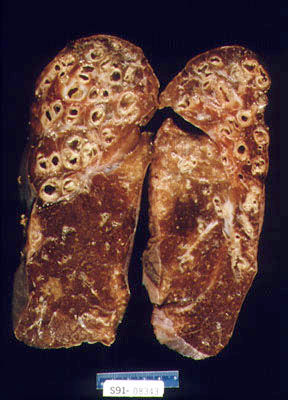
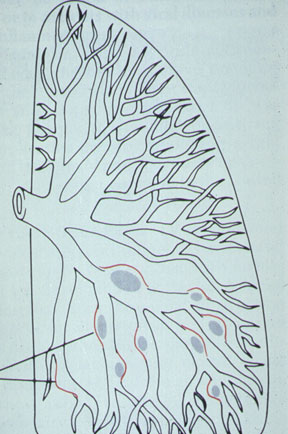
Bronchiectasis is a severe, chronic infection of the lung causing pronounced
permanent abnormal dilatation of bronchi and
bronchioles.
Pathology
- Chronic, necrotizing infection of bronchi in a segment or
multiple segments of the lung.
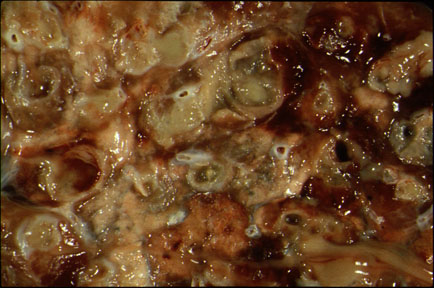
- Infection damages and weakens walls of bronchi so that these
structures become markedly dilated and filled with
mucous and pus.
Pathogenesis
- The major factors which contribute to the development of bronchiectasis are loss
of muco-ciliary clearance system and infection.
- The loss of muco-coliary escalator system can follow either obstruction (foreing
body) or due to defect in dyneim arm of cilia (Kertagener syndrome) or
due to abnormal mucus (Cystic fibrosis).
- Defect in the clearance mechanism is followed by accumulation of secretions,
bacterial overgrowth, infection and atelectasis.
- The chronic infection damages the integrity of the bronchial wall causing
dilatation.
- Temporary (6 Weeks) tubular bronchial dilatation occur in all pneumonias.
- Saccular bronchiectasis follows destructive
inflammation of the bronchial wall.
Pathophysiology
- The muco-ciliary escalator system is destroyed in bronchiectatic segemnts
perpetuating accumulation of secretions and infection.
- The bronchiectatic segments are also insensitive thus do not
provoke cough untill the pus spills over to normal bronchi.
- Airway obstruction follows diffuse bronchiectasis.
- If there is signifiacant recurrent pneumonias and peribronchial fibrosis
a restrive defect can be seen.